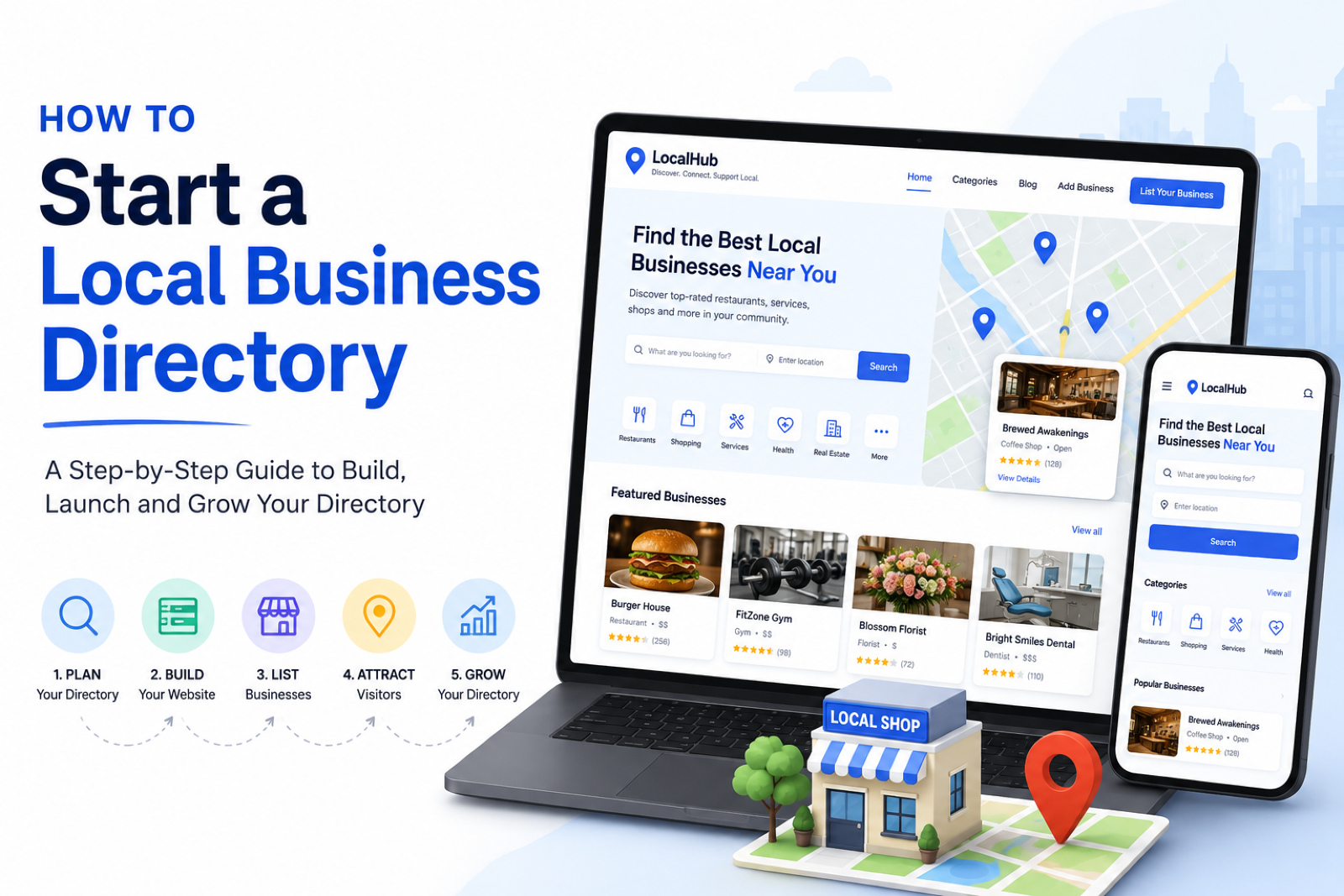
TL;DR: To build a directory website: pick a narrow niche, choose a hosted directory builder (or WordPress with a directory plugin), define the fields every listing needs, seed the first 50 to 100 listings yourself, set up SEO on day one, then open submissions and add monetization once traffic arrives. With a no-code directory builder builder the technical setup takes an afternoon. The real work is the listings.
A directory website is a searchable collection of listings organized by category and, usually, by place: restaurants in Austin, wedding photographers in Ireland, AI tools for marketers, member profiles for an association. It earns money by charging the people listed, not the people browsing, which is why directories remain one of the few website types a single person can launch and run profitably.
This guide walks through the nine steps that take a directory from idea to launch, in the order that works. Each step says what to do and the mistake most first-time builders make at that point.
Step 1: Pick a niche you can actually win
The directories that fail are the ones that try to list everything. "Business directory for the USA" competes with Yelp and Google. "Dog groomers in the Pacific Northwest" competes with nobody serious.
Narrow on two axes at once: a category and a place or audience. Then check three things before you commit:
- People search for it. Search phrases like "[category] near me", "best [category] in [city]", or "[category] directory" should show real volume in a keyword tool, and the top results should be weak: thin aggregator pages, outdated lists, forum threads.
- Listings exist and are findable. You will seed the directory yourself (Step 4), so you need a source: Google Maps, an association member list, a trade show exhibitor list, a spreadsheet you already have.
- The listed businesses have money and a reason to pay. A directory of free community events is useful but hard to monetization features. A directory of wedding venues is both.
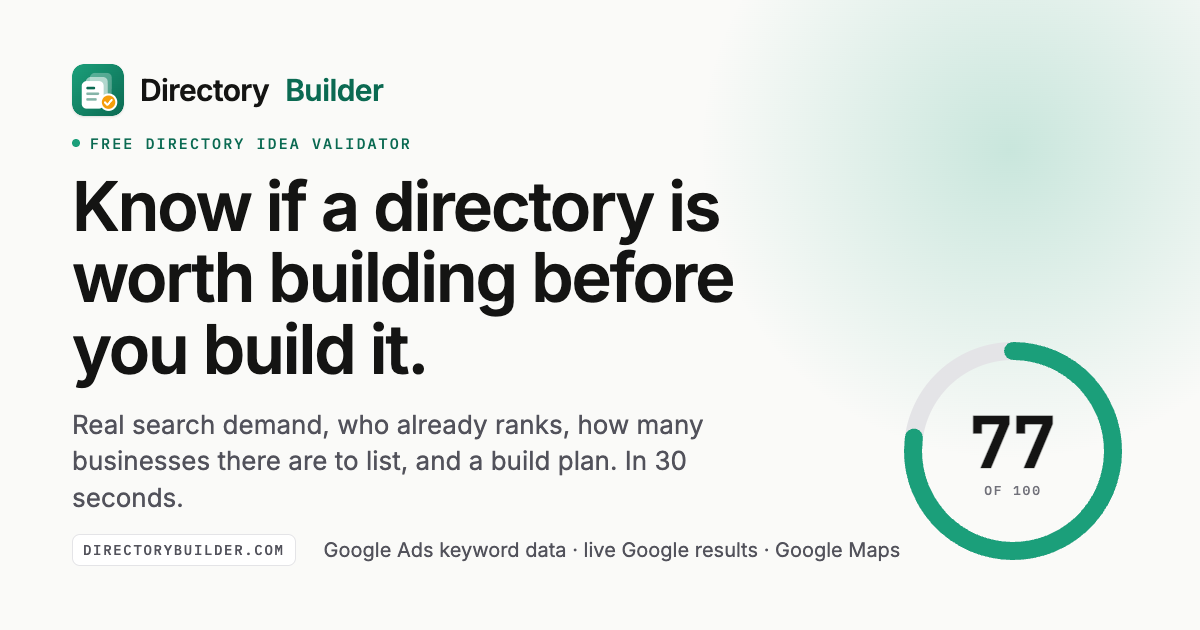
If you are still choosing, browse 700+ directory ideas by industry, or run your idea through the free Directory Idea Validator, which scores demand, competition, and monetization in a minute.
Step 2: Choose how to build it
There are three realistic ways to build a directory website in 2026. Pick based on how much time you want to spend on the website versus the listings.
| Hosted directory builder | WordPress + directory plugin | Custom code | |
|---|---|---|---|
| Time to a working site | An afternoon | A week or two | Months |
| Cost to start | Free plan or $10 to $30/month | Hosting + theme + plugin, often $200+ up front | Developer time |
| Maintenance | None, it is hosted | Updates, backups, plugin conflicts, security | All yours |
| Monetization | Built in (paid listings, featured spots, leads, ads) | Via extra plugins | Build it |
| SEO structure | Category, city and listing pages generated for you | Depends on the theme | Build it |
| Best for | Most first directories | People who already run WordPress sites | Products where the directory is one feature of a larger app |
For a first directory, a hosted builder is the right call for one reason: every hour spent on hosting and plugins is an hour not spent getting listings, and listings are what rank and earn. Directify is a no-code directory website builder that generates the whole site from a one-line description. The rest of this guide uses it for the examples, but the steps apply whichever route you take.
Step 3: Define your listing fields and categories
Before you add a single listing, decide what every listing must contain. This is the structure visitors filter on and search engines index, and changing it after 500 listings is painful.
Fields every directory needs: name, description, category, website, location (address or at least city), and a photo. Then add the three to five fields that make your niche useful: price range for restaurants, capacity for venues, languages spoken for therapists, pricing model for software. These become filters on your browse pages.
Categories: keep the top level to roughly 8 to 15 categories, and use subcategories or tags for the rest. A visitor should find the right section in one click. If your niche is location-based, cities and regions are a second axis, not categories.
On Directify, picking a template (local business, members, marketplace, events, job board template, and others) creates the matching field set automatically, and you can add custom fields for anything specific to your niche.
Step 4: Seed the first 50 to 100 listings yourself
This is the step that decides whether the directory works. An empty directory attracts no visitors, and without visitors nobody submits a listing. Break the loop by adding the first batch yourself.
Where the listings come from depends on the niche:
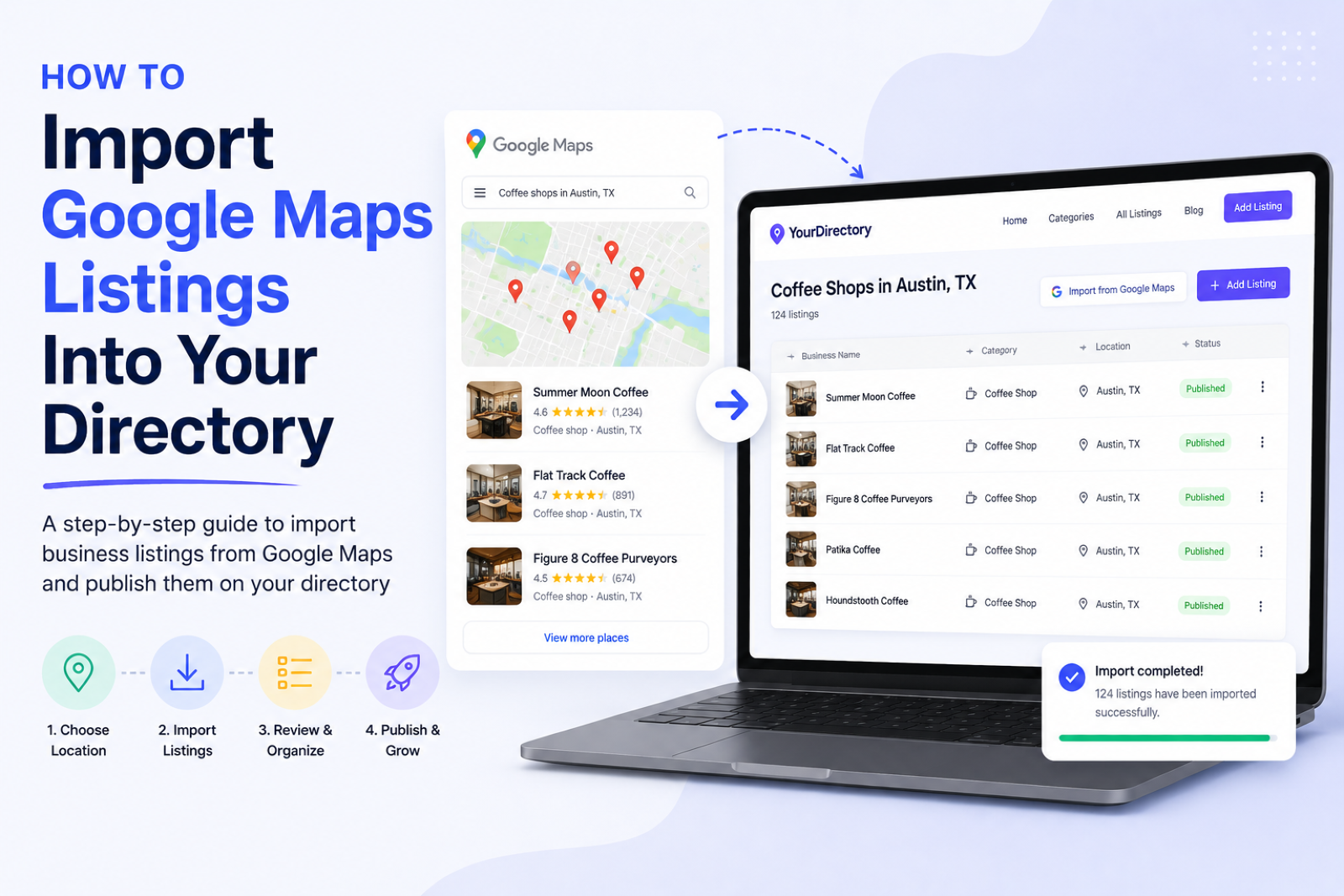
- Local businesses: import them straight from Google Maps. Directify's Google Maps import pulls name, address, phone, hours, website, photos and reviews for every business matching a search.
- A list you already have: import a CSV or sync a Google Sheet, so a spreadsheet becomes a live directory in minutes.
- Websites: paste a URL and let AI extract the listing details, which is the fastest way to add software tools, agencies, or venues one at a time.
Aim for enough listings that every category page has something on it. A category page with two listings looks abandoned. Fifty good listings across eight categories beats five hundred thin ones.
Step 5: Design, domain, and the pages every directory needs
A directory does not need a custom design, it needs a clear one: a search box above the fold, categories visible on the homepage, and listing cards that show the fields people compare on.
Three things to set up here:
- Your domain. Connect a custom domain from day one so every link you earn points at the right place.
- Your brand. Set colors, fonts, logo and homepage sections once. On Directify the Theme Editor previews changes live.
- The supporting pages. An About page that says who runs the directory and why, a Contact page, a "Submit a listing" page, and a pricing page if you plan to charge.
Step 6: Set up SEO before launch, not after
Directories win in search because they generate hundreds of pages that each answer a specific query: "[category] in [city]". That only works if the structure is right from the start.
- One page per category and per city, each with a unique title and a paragraph of real text, not just a list.
- Listing pages with the business name in the title, a full description, and the fields marked up with schema.org so Google can show rich results.
- An automatic sitemap and clean URLs. Both are generated for you on a hosted builder.
- Internal links from the homepage to every category, and from every listing to its category and city.
- A blog for the guides your niche searches for ("how to choose a wedding venue"), each linking to the relevant category pages.
Directify handles schema markup, sitemaps, and category and location pages automatically, which is most of the technical SEO a directory needs.
Step 7: Open submissions and let businesses claim their listings
Once the directory has visitors, it starts filling itself. Two features make that happen:
- public submissions: a form where anyone can submit a listing. Keep every submission in a moderation queue so nothing goes live unreviewed, and turn on spam protection.
- Claiming: a "Claim this listing" button on every listing you seeded. Owners who claim keep their listing current and are the first people who will pay for an upgrade.
Both are standard on hosted builders. On Directify you can also invite owners to claim by email in bulk.
Step 8: Add monetization once traffic arrives
Do not charge before the directory has visitors, because nobody pays to be listed where nobody looks. Once you have steady traffic, the proven models are:
- Paid and featured listings: free basic listing, paid upgrade for placement, photos, or a badge.
- Lead generation: charge per enquiry sent through the directory.
- Ads and sponsorships: banner placements sold to businesses in the niche.
- Memberships: recurring plans for the listed businesses.
The full breakdown, with numbers, is in 15 ways to monetize a directory website. On Directify, paid submissions, featured spots, pay-per-lead and ad banners are toggles paid into your own Stripe, PayPal or Lemon Squeezy account with no commission taken.
Step 9: Launch and promote
A directory launches twice: once to the businesses listed on it, once to the public.
- Email every business you listed. Tell them they are featured, send the link to their listing, and ask them to claim it. A good share will link to you from their own site, which is the backlink source most directories never use.
- Post in the places your niche already gathers: Facebook groups, subreddits, newsletters, association forums.
- Submit the directory to directories of directories and startup launch sites.
- Publish two or three blog guides aimed at the searches your audience makes, each linking to category pages.
Then keep adding listings. The directories that grow are the ones still adding listings in month six.
How long does it take and what does it cost?
| Hosted builder (Directify) | WordPress | |
|---|---|---|
| Set up the site | 1 hour | 1 to 2 days |
| Seed 100 listings | 2 to 4 hours with imports | 1 to 2 days by hand |
| Monthly cost | Free plan, paid from $12/month | $15 to $50 hosting plus plugin licences |
| Ongoing maintenance | None | A few hours a month |
Directify's free plan is enough to build and test the directory. Paid plans start at $12/month, or $10/month billed yearly, with a 7-day trial.
Frequently asked questions
Can I create a directory website for free? Yes. Directify's free plan lets you build the directory, add listings, and publish on a Directify subdomain. You need a paid plan for a custom domain and the monetization features.
Do I need to know how to code? No. A hosted directory builder covers the site, search, submissions, payments and SEO. The skills that matter are picking a niche and gathering listings.
How many listings do I need before launch? Enough that every category page looks alive, which usually means 50 to 100 listings for a local niche and more for a national one.
What is the difference between a directory website and a business directory? A business directory lists companies, usually by location. "Directory website" is the broader term and includes member directories, software directories, job boards, and marketplaces. See directory website vs business directory.
Which directory website builder should I use? For most first directories, a hosted builder with imports and monetization built in. Pick a directory template that matches your niche, or start with Directify's free plan.
For a visual walkthrough of the whole process, watch this:
Ready to Build Your Directory?
Start creating your professional directory website today with Directify's no-code platform.
Get Started Free